


#askmosaic

You ask, MOSAiC scientists and crew answer!

Submit your #askmosaic questions



#askmosaic#askmosaic: A Plethora of Polar Bears

This week's question comes from Corbett from Middleton Middle School: How many polar bears have you seen?
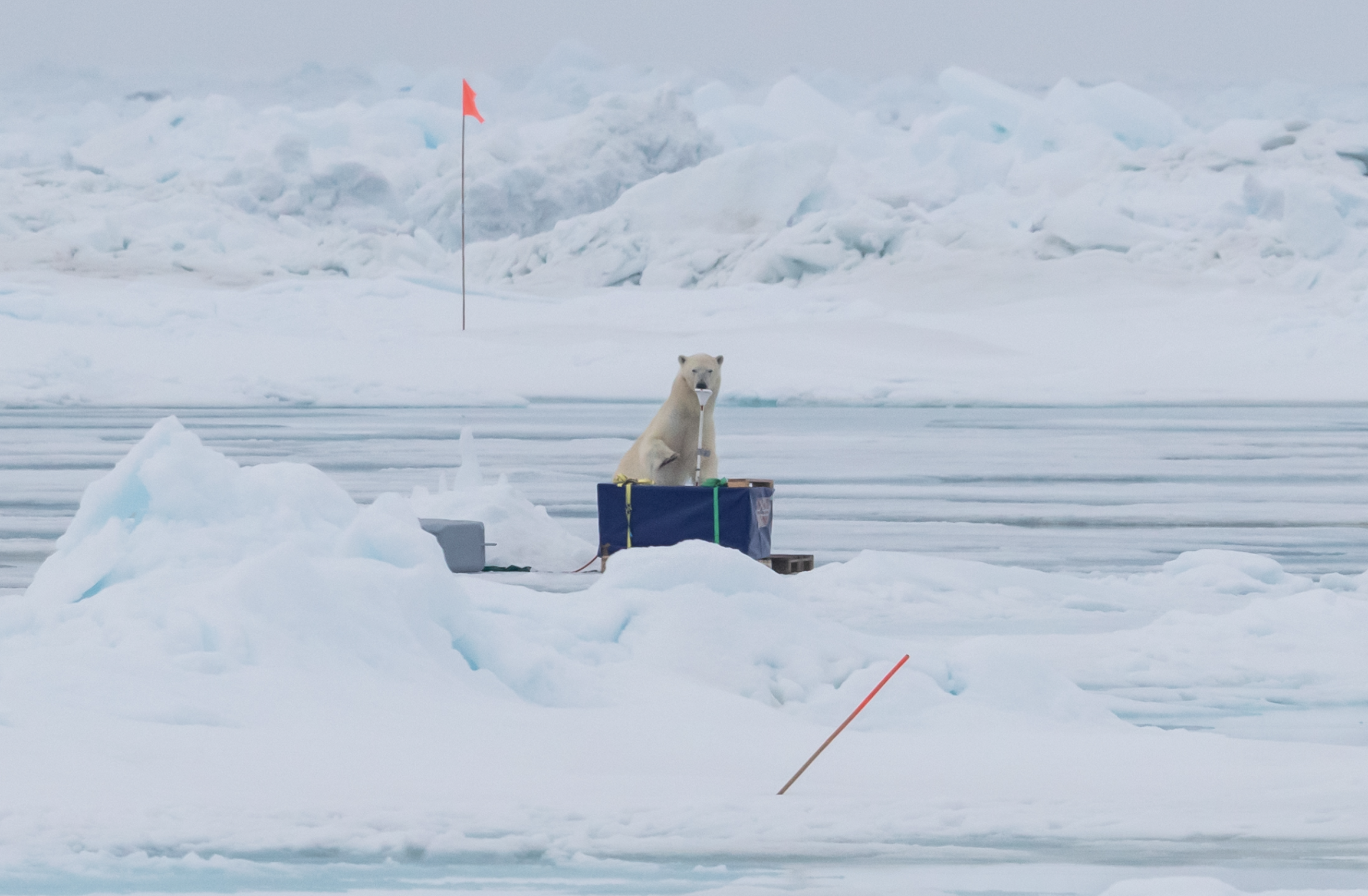
 

Polar bear


During this leg alone, expedition participants have had 19 encounters with polar bears! Although this sounds like a lot, it isn't terribly surprising as the Polarstern has drifted closer and closer to the ice edge where polar bears like to hang out and hunt. Fortunately the MOSAiC safety and logistics team has always made sure both the polar bears and expedition team members are safe and stay far away from one another. 

Photo credit: Lianna Nixon/CIRES


#askmosaic

This week's question was sent by Everett and Emmett from Double Eagle Elementary School in Albuquerque: Can you play the game 'I spy' in the Arctic?
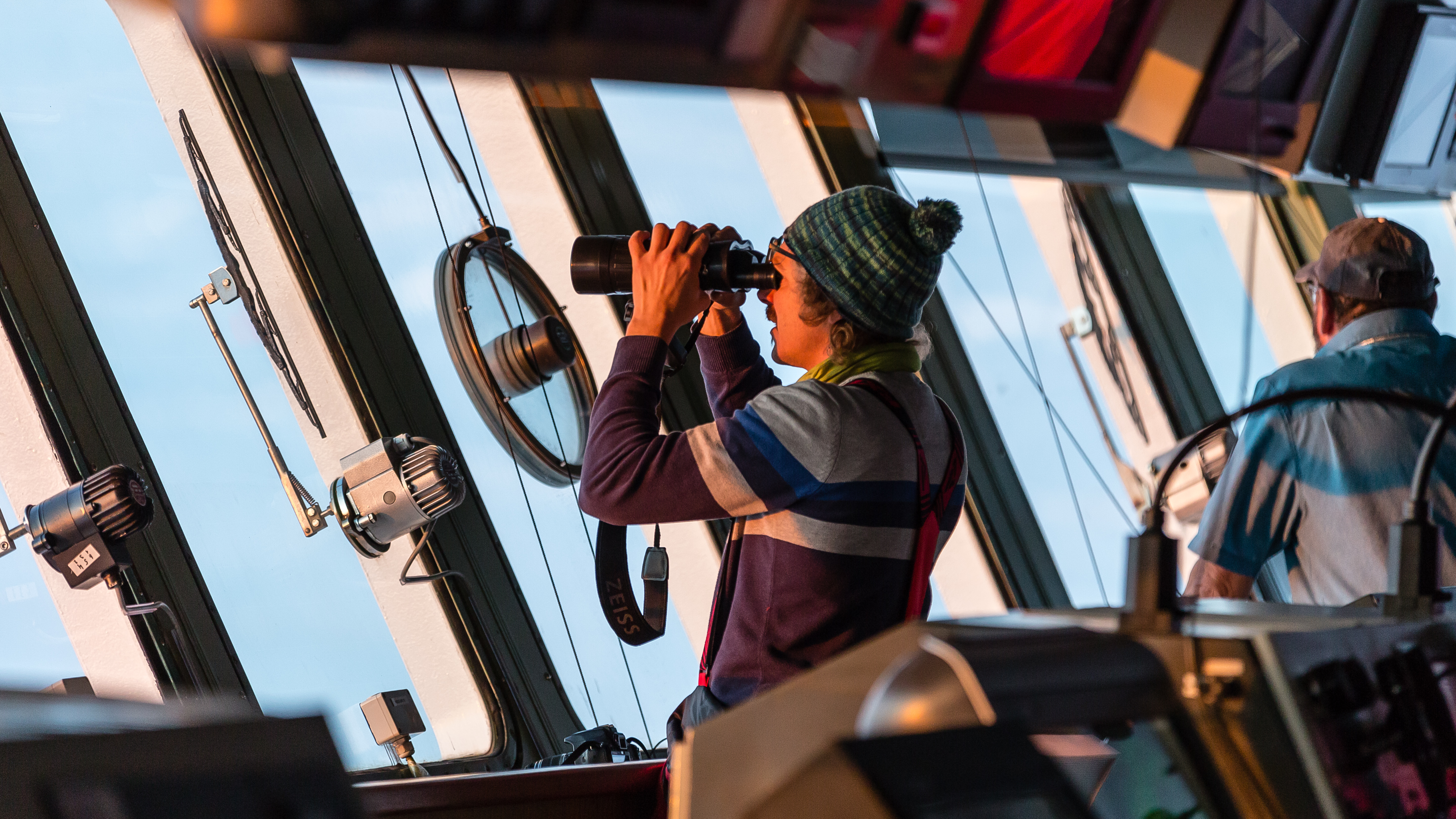
 

Thomas Sterbenz during bridge watch. 5 October 2019, Stefan Hendricks

"While not a game, we have people on the ice and on the ship's bridge whose only job is to watch for bears. We all do this job, usually in shifts of 1-2 hours. As we have drifted more to the south we occasionally see birds; gulls and snow buntings, for example. The message of an animal sighting comes over the radio and everyone looks for it. With all of the movement of the ice for many weeks I played a game of "I spy" or maybe more like Where's Waldo with Met City in the morning, as it would often be in a different place when I woke up than where I left it when I went to sleep."

-Chris Cox, NOAA; Chris recently returned from leg 3 of the expedition


Photo: Thomas Sterbenz during bridge watch, 5th of October 2019; Photo by Stefan Hendricks/AWI

 MM


#askmosaic

This week's question was submitted by Daniel from Middleton Middle School: Which month is the coldest month in the Arctic? Hottest?

Photo of MOSAiC researchers by Dave Costa

Great question! We've been tracking conditions in the Arctic now since last September (see MOSAiC Weekly Tracking below). What do you notice about how the temperatures in the Arctic have changed with the seasons? How cold did it get in the Arctic winter? What have temperatures been like recently, during the Arctic summer? With the data that we have, what can you say about what have been the coldest and warmest months in the Arctic so far during the MOSAiC expedition? How do these temperature ranges compare to where you live?

Photo of Team Atmosphere members Dave Costa (L) and Ola Persson (R) with polar bear guard Hans Honold, taken in November, 2019 when the air temperature was -28 degrees C! Photo credit: Dave Costa

MM


#askmosaic

Polarstern on ice


Eliana from Middleton Middle School wants to know: Does it feel weird having your ship on ice?

"There are no waves so the ship usually stays very still. Sometimes you forget you are on a ship at all! However, when the ice is moving, sometimes it makes noises as it rubs against the ship. My cabin [was] on a lower deck and I [could] hear the ice when I [was] trying to sleep."

-Chris Cox, NOAA; Chris just returned from leg 3 of the expedition


Photo: The Polarstern moored to sea ice when it first arrived at its floe on leg 1. Photo credit: Esther Horvath


 MM


#askmosaic

On board the Polarstern

This week's question: Is the ship fancy?

"For us scientists Polarstern is a very “fancy” ship because of all its scientific installations, the well-experienced crew and a good atmosphere. It provides almost everything we could wish for. However it is not “fancy” as compared to a luxurious cruise ship. For us, a cruise vessel would not be fancy at all, because it would not provide us with big cranes, electricians to fix our devices or highly specialized computer networks. We do have a pool and a sauna, but this is definitely not comparable to a wellness temple on a fancy cruise vessel."

-Christian Katlein, Team ICE, Alfred Wegener Institute

Photo: MOSAiC team members relax in the Polarstern's red salon; Photo credit: Folke Mehrtens


Want to check out the "fancy" Polarstern for yourself? Take the 360-degree tour!
 

MM Featured in MOSAiC Monday - July 6, 2020


#askmosaic#askmosaic: Ice cream on an icebreaker

This question was submitted by Everett & Emmett from Double Eagle Elementary School in Albuquerque: Can you make ice cream outside?


"One team member used to shake a tub containing powdered milk, sugar, salt and strawberry jelly as part of his exercise routine out on the deck of the Kapitan Dranitsyn during the transit in February when it was in the -30s C (very cold!). He made ice cream this way and it was quite good!"

-Chris Cox, NOAA; Chris just returned from leg 3 of the expedition

MM​ Featured in MOSAiC Monday - June 29, 2020


#askmosaic icon#askmosaic: It'a a Bird, It's a Crane

Everett and Emmett from Double Eagle Elementary School in Albuquerque want to know: What's the giant red thing on the front of the ship?

Bow crane; Esther Horvath

"This is the bow crane, which can lift up to 25 tons. This crane is large enough to put regular containers on the bow of the ship or even on the uppermost deck. For example, during MOSAiC the bow area (front of the ship) is equipped with 20 containers that have been lifted to their current position with the crane. The majority of these containers are equipped with a huge number of scientific instruments to measure continuously hundreds of parameters to characterize the atmospheric state and composition."

-Hans-Werner Jacobi, CNRS & University Grenoble Alpes, France


In this photo taken by Esther Horvath during the first leg of MOSAiC, you can see the bow crane lifting equipment onto the ice.


 MM Featured in MOSAiC Monday - June 15, 2020


#askmosaic#askmosaic: Frigid Waters

This question was submitted by Shae from Jeffco Public Schools: What would happen if one of the scientists fell into the water? Would they be ok from the cold temperature of the water? 
 

MOSAiC water training


"If a scientist fell in the water, it could be dangerous for them. If they got all wet, they need to change clothes as soon as possible, both because of the cold water, and also because of the freezing air temperature. But.... they are never alone."

-Monica Votvik, Leg 3 Safety and Logistics Group Leader


Did you know?

Many of the MOSAiC participants had to go through survival training prior to the expedition, which included being immersed in frigid water and practicing swimming in simulated rough seas. In this photo, MOSAiC scientist John Cassano participates in water safety training in the icy fjords of Norway (photo credit: Steven Fons). This survival training requirement is part of a larger 'Polar Code,' or set of rules adopted by the International Maritime Organization (part of the U.N.) that many ships venturing into the Arctic or Antarctic must follow to stay safe and minimize their environmental impacts. 


 MM Featured in MOSAiC Monday - June 1, 2020


#askmosaic#askmosaic: There's Something in the Air

This question was submitted by Godlove at West Bronx Academy For the Future in NYC: What if a big volcano explosion were to happen where its ashes completely covered the sun? How would it affect the Arctic's climate and other surroundings? Will things go back to normal or will something change?


Mount Pinatubo

"If the ash of a volcano (that is in reality particles created from sulfur dioxide that the volcano emits) reaches high altitudes like 20 km (~12 mi) or higher, then these particles can stay in the atmosphere for months and reflect more sunlight than the atmosphere would otherwise do. It will become colder on Earth for as long as the particles are there. One good example is the Pinatubo eruption in the beginning of the 90s. The planet cooling down by a fraction of a degree will mean that also the Arctic cools down. However, as soon as the particles are removed naturally, through falling out from the atmosphere, the effect is gone and all goes back to the current status."

-Julia Schmale, Aerosol Scientist and member of MOSAiC Team Atmosphere


The Mount Pinatubo eruption in the Philippines that occurred on June 15, 1991 (shown in the photo; photo credit: Arlan Naeg/AFP/Getty Images) sent a huge cloud of ash as high as 22 miles into the atmosphere. Twenty million tons of sulfur dioxide gas were also injected into Earth's stratosphere. If you remember from the February 24th MOSAiC Monday (seems like ages ago now!), the stratosphere is the layer above the troposphere in the atmosphere. The troposphere is where nearly all of Earth's weather occurs. When sulfur dioxide reacts with water in the atmosphere, it turns into droplets of sulfuric acid. Sulfuric acid in the troposphere would get fairly quickly washed out by rain. But sulfuric acid in the stratosphere can stay there for years, scattering and absorbing sunlight that would otherwise reach the earth's surface. This is exactly what happened after Pinatubo erupted, and as a result, this eruption caused a global cooling effect of about 1 degree F (0.6 degrees C) over the next two years!

 MM Featured in MOSAiC Monday - May 25, 2020


#askmosaic#askmosaic: Breaking the Ice

This question was submitted by Everett and Emmett from Double Eagle Elementary School in Albuquerque: How does the ship break the ice?

Icebreaker bow

Great question! Icebreaker ships come in a variety of shapes, sizes, and abilities, but they are all designed to navigate to some degree through ice-covered waters, like the Arctic Ocean. Icebreaker ships have three distinct characteristics that make them different from other ships: 1) A strengthened hull, or ship body, 2) A unique rounded body and spoon-shaped bow (front), and 3) LOTS of power. What do you think the purpose of each of these characteristics is?

Polarstern moving through ice

Icebreakers like the RV Polarstern shown in the photo on the left (credit: Stefan Hendricks) can break through sea ice in a couple different ways. The main way an icebreaker breaks ice is by riding up onto the ice and crushing it using its weight and gravity—the spoon-shaped bow makes this possible, shown in the drawings on the right (credit: Yamaguchi et a.l, 1997). But icebreakers often also have the ability to ram sea ice straight on, which can be a useful tactic for breaking particularly thick ice.


The Polarstern can break through ice up to 1.5-meters thick no problem by crushing it, and it can break ice up to 3-meters thick using the ramming technique. You might recall that the Russian supply ship Akademik Fedorov which sailed out with the Polarstern at the beginning of the MOSAiC expedition to help set up the Distributed Network of instruments nearly got stuck in the ice on its journey back to Norwary. Although it has a strengthened hull, the Fedorov is not actually a true icebreaker, and thus had to ram the ice nearly 70 times to break free!

Read more: How not to get stuck in the Arctic sea ice


Watch this video to see how an icebreaker breaks through ice:


 MM Featured in MOSAiC Monday - May 18, 2020


#askmosaic#askmosaic: A Dynamic Experience

The Polarstern in dynamic ice


This question was submitted by Gracie from Middleton Middle School: What is the most interesting thing that you have experienced? 


"The most interesting thing that I experienced on the third Leg of MOSAiC was definitely the ice dynamics, or just generally the ever-changing "icescape". Not only did it challenge us quite a lot in our everyday work of running our instruments and infrastructure, but it also demonstrates every single time that we're not operating on solid ground up here. Being able to watch the ice shear, tear apart and pile up several meters high is a spectacular demonstration of how wind and ocean currents have an influence on the ice through enormous forces acting upon it." Photo credit: Michael Gutsche

-Andi Preußer, MOSAiC Team Atmosphere


 MM Featured in MOSAiC Monday - May 11, 2020


#askmosaic#askmosaic: Orcas in the Arctic?

This question was submitted by Makayla from Seneca Falls Middle School: Are there killer whales in the Arctic Circle? If so, have you seen any?

"I was on the Akademic Fedorov when it returned to Norway in late October after helping deploy MOSAiC. There was one sunny afternoon in very calm open water in the Barents Sea just north of western Russia when everyone was out on the deck. It was the first time we had seen the sun in several weeks and it was a beautiful day. There were killer whales swimming alongside the ship then. I didn't actually see them because I was on the wrong side of the ship, but I did see some video. We have not seen any on Leg 3 and I wouldn't expect to."

-Chris Cox, NOAA, MOSAiC Team Atmosphere


"My knowledge on the killer whales is limited. During fisheries surveys in the Northeast Atlantic in late May, we see killer whales in Northern Norway and the southern part of the Barents Sea, and they are already known to be commonly observed in that region (there are tourist trips for this). These whales target big herring schools in the shelf area."

-Serdar Sakinan, Wageningen Marine Research, MOSAiC Team Biogeochemistry & Ecosystems


Did You Know?

Orcas in the Arctic

Lower-than-average sea ice in the Arctic in recent years has led to an increase in orca sightings by Inuit hunters in the Canadian Arctic. Orcas (aka killer whales) are not typically found in parts of the Arctic with significant ice cover as they have prominent dorsal fins and are not well adapted to these kinds of conditions. Scientists wonder if the geographic range of orca habitat in the Arctic will increase in the future as the Arctic sea ice extent continues to decrease. Many people wonder what the impact of an increase in orcas in the Arctic could have on Arctic marine ecosystems and food webs. Photo credit: Crystal Speedie

Learn more


 MM Featured in MOSAiC Monday - May 4, 2020


#askmosaic#askmosaic: Wildlife sightings

Matthew from Middleton Middle School wants to know: Do you only see polar bears in the Arctic, or do you see other wildlife?


Lucy the Seal

"Since I was feeling pretty cooped up inside towards the end of last week I decided to start to make more of an effort to get outside and bear guard when we couldn’t fly [drones], so I volunteered to go to Met City with some folks to do some routine checks...On this day I was out, a lead (crack in the ice) had opened up from the front of the ship, curving around DroneVille and then along the side of Met City, running right along our infrastructure, but not cutting anything off or causing any damage. This was a nice lead. Beautiful and non-destructive. Not yet frozen over, so still having open water, the wind creating gentle ripples. It was thrilling to stand by it, knowing that just below was 4 km of cold darkness to the sea floor, but just a few feet away from the edge, standing on the ice, I was safe...As I stood watch for bears, I looked over towards the open lead and saw a small black dot. I didn’t think much of it, but looked closer out of curiosity. Then I realized what it was. A seal! Since the water had not frozen over yet, it provided an opening for this little guy to pop up for some air. I was flooded with joy and exhilaration at the site of my first wildlife out here. Sometimes I forget we share this space with some other creatures. I felt so lucky to have been there at just the right time to capture this rare moment. We named the seal Lucy." Photo credit: Julia Schmale

-Gina Jozef, University of Colorado Boulder, member of MOSAiC Team Atmosphere and UAV (drone) pilot. Gina is currently on board the Polarstern for Leg III of the expedition. This is an excerpt from Gina's blog, which she updates regularly. 

Read more in Gina Jozef's MOSAiC expedition blog


MM Featured in MOSAiC Monday - April 27, 2020


#askmosaic#askmosaic: People, patterns, and power

This question was submitted by Alex from Seneca Falls Middle School: Do you have different shifts for people working and if so, does working at night interfere with a person's sleep patterns?

Polarstern bridge duty

"We are (were) all constantly working during (polar) night ; ). But for the scientists, the outdoor work usually takes place between 9 am and 5:30 pm, because during these hours we have the bear watch. Before and after the outdoor working hours there are meetings and people save and analyze their data. Parts of the ship’s crew work in shifts called 'watches' on board. For example, the nautical officers on the bridge are on watch two times for four hours: from 0 to 4 am and pm, from 4 to 8 am and pm, and from 8 to 12 am and pm. I just talked to one of them being on watch from 4:00 to 8:00 who told me, that for him this rhythm is no problem at all!"

-Folke Mehrtens, Communications Office aboard the Polarstern during Leg II of the expedition

Photo (R): Thomas Sterbenz takes his turn on bridge watch; Photo credit: Stefan Hendricks


Jill from Middleton Middle School wants to know: What do you use as a power source for your equipment and ship?

"The ship's diesel generators are our only source of power out on the ice and long power cables were installed to run the equipment at various sites out on the ice. Sometimes when the ice cracks open or ice ridges form the cables are trapped or damaged and we need to move them to new locations. This happend several times during leg 1. When the sun rises again a few remote instruments may be able to use solar power."

-Byron Blomquist, University of Colorado Boulder/NOAA, MOSAiC Team Atmosphere. Byron participated in Leg 1 of the expedition.

MM Featured in MOSAiC Monday - March 30, 2020


#askmosaic#askmosaic: Finding Comfort in a Remote Place

MOSAiC Leg II participants

This question was submitted by Jill from Middleton Middle School: When you left, did you miss your family? I know I would. Do you get to talk to them? 

"Leaving my family was absolutely the worst part of taking part in the MOSAiC expedition for me. I travel to the polar regions to do fieldwork often and it never is easy to leave my family behind. I even missed my daughter's 11th birthday while I was away on the MOSAiC expedition, although we did have her birthday party before I left the US. I have lots of family photos on my iPad and I look at these every night before I go to sleep. That helps me feel just a little less far away from the people I love.

While we were traveling to the Polarstern on the Russian icebreaker the Kapitan Dranitsyn, we only had access to WhatsApp to send messages to our family, so for the 5 weeks that I was on that ship I couldn't call home to talk to my wife or daughter. But, we did send messages every day and I was able to hear about all of the things they were doing at home and I could tell them what I was doing each day. Now that I am on the Polarstern I can still send messages with WhatsApp but I can also send text-only e-mail messages, and we have access to a satellite phone we can use to call home, although these calls cost about $0.50 per minute."


-John Cassano, University of Colorado Boulder, MOSAiC Team Atmosphere. John is currently on board the Polarstern for Leg III of the expedition.

Photo: MOSAiC Leg II participants in front of the Polarstern; Photo credit: Lukas Piotrowski


Kyle from Middleton Middle School wants to know: How do you sleep in such cold conditions?

"Actually, it's very warm inside the ship and our cabins are very comfortable. Just like your room at home. The ship has plenty of electrical power for heat, lights, computers and everything else. But to work outside in the cold we need to put on a lot of specialized clothing and safety gear! Usually, we don't stay outside longer than 4-5 hours at a time."

-Byron Blomquist, University of Colorado Boulder/NOAA, MOSAiC Team Atmosphere. Byron was on Leg I of the expedition.
 

MM Featured in MOSAiC Monday - March 16, 2020


#askmosaic#askmosaic: You're as Cloud as Ice

This question was submitted by Benjamin from Middleton Middle School: Does the atmosphere affect the temperature and/or thickness of sea ice in the Arctic?

Record warmth in the North Pole

"Yes! The atmosphere plays a critical part in the Arctic climate system. Storms can bring warm and moist air into the Arctic causing the temperature to warm over short periods of time. Other atmospheric circulation patterns can also bring warm air to the Arctic and as climate changes, one question climate scientists face is how these changes will alter how much warm air is transported to the Arctic. Image: On July 14, 2019, the Arctic community of Alert, Nunavut, Canada shattered their record for the highest temperature recorded; Image credit: The Weather Network

The presence of clouds can also alter the temperature in the Arctic. Much like at home where cloudy nights are often warmer than clear nights clouds can also increase the temperature in the Arctic by trapping some of the energy radiated from the surface that would normally escape to space.

How warm or cold the atmosphere is is one of the main factors that controls how thick the sea ice can become. As the atmosphere becomes warmer, the sea ice will become thinner. The thinner sea ice also allows more heat to escape from the ocean and warm the atmosphere, so there is a positive feedback here. A change that causes a warmer atmosphere will reduce the thickness of the sea ice and this will result in the atmosphere becoming even warmer."

-John Cassano, University of Colorado Boulder and member of MOSAiC Team Atmosphere; John is currently on board the Polarstern for Leg III of the MOSAiC expedition.


MM Featured in MOSAiC Monday - March 9, 2020


#askmosaic#askmosaic: Sick at Sea

This question was submitted by Derek from Middleton Middle School: If someone gets seasick on the ship is there anything they can do except wait until the next supply ship comes?

"The Polarstern is locked in the ice so that it barely moves at all. Thus, luckily, people have not been getting seasick while out at the MOSAiC site. On the other hand, on our re-supply voyages between Norway and the Polarstern, we have experienced some pretty big waves and the re-supply ships have moved quite a bit. Some people do get seasick from all of this movement. Sometimes people can take medicine to help with this sickness, and other times it is just best to lay down in bed. Thankfully the bumpy voyage in open water is usually only a couple of days long so that people do not have to be seasick for too long!"

-Matthew Shupe, University of Colorado, MOSAiC Team Atmosphere and expedition co-coordinator


Polarstern doctor

On a similar note, Corbett from Middleton Middle School wants to know: If somebody gets sick, do they send another person to fill in for him/her?

"If people get sick onboard Polarstern they are taken care of by a doctor. The doctor can help address the sickness, provide medicines if needed, and generally support the sick person until they are well again. Unfortunately the MOSAiC ship is so far away from land that it is not typically possible to exchange people to fill in for others that are sick. While someone is sick onboard the ship, the other people onboard will help to cover for the sick person until they are well enough to do their work again."

-Matthew Shupe, University of Colorado, MOSAiC Team Atmosphere and expedition co-coordinator

Photo: On Polarstern, there is a hospital with doctor’s office, surgery room, accommodation for patients, and an emergency station, which is managed by our doctor and nurse. For Polarstern expeditions, we need a surgeon with broad expertise and these requirements are met by Prof. Dr. med. Miersch (pictured). He is a surgeon, urologist, and emergency doctor. Photo credit: Esther Horvath

MM Featured in MOSAiC Monday - February 24, 2020


ask mosaic#askmosaic: Answer me these questions three

How are you going to be able to get extra supplies if you run out? Do you have extra on the ships?

Choosing vegetables for dinner

"With every crew exchange the ship is supplied with food, materials and fuel. These supply missions take place every two months, but we are also prepared for the situation, that a vessel cannot make it to our remote position. In December, the resupply vessel Kapitan Dranitsyn brought enough food and fuel that it will last until June, if necessary. This is due to the fact that after the scheduled resupply by ship in February, the exchange in April is going to be by air and it is not possible to bring a lot of cargo that way. There is also an extra reserve food container on board Polarstern, which the cooks are only allowed to open in presence of the captain. Therefore, we are confident not to suffer from starvation ; )"

-Captain Stefan Schwarze, Master of RV Polarstern, and Folke Mehrtens, Communications Officer on board the Polarstern, AWI

Photo (right): MOSAIC crew member Kai Rosenhagen selects vegetables from the ship's food storage room for dinner. Photo credit: Esther Horvath


This question was submitted by Hanna from Middleton Middle School: How do you locate your ship from on the ship?

"We can observe our position with the Global Navigation Satellite System (GNSS) which can be used with handheld receivers or by the more sophisticated GNSS receivers installed on the ship. This works day and night and in any weather. It is not required to use sextants or other classical navigation methods."

-Christian Haas, sea-ice geophysicist at the Alfred Wegener Institute and chief scientist of MOSAiC leg 2

You might be familiar with the term 'GPS,' or the Global Positioning System. GPS is what allows you to find your way around (if you live in the U.S.) when you are, for example, using Google Maps on a smartphone. GPS is just one type of satellite navigation system and is 'owned' by the U.S. Other countries and regions have similar satellite navigation systems - the European Union owns and operates a GNSS called Galileo

Dr. Gladys West

Did you know? A woman named Dr. Gladys West was instrumental in the development of GPS. Gladys studied math in college, then went on to do work in astronomy and analyze data from satellites. In the 1970s and 80s, Gladys programmed a computer to make better and better models of the shape of the earth taking into account things like gravitational and tidal forces (that actually distort the shape of the earth from a perfect sphere). The data from the work Gladys did became the foundation for our modern GPS system! Photo credit: U.S. Air Force

NASA: How does GPS work?

Make your own sextant and navigate using the stars


Aiden from Seneca Falls Middle School wants to know: Could you create a video of the layout of the ship?

We can do one better! You can explore the inside of the Polarstern at your leisure with this 360-degree virtual experience created by the Alfred Wegener Institute. Check out the ship's wet and dry labs where scientists can look at things like ice cores or samples of seawater under a microscope, walk through the kitchen where meals for expedition participants and crew members are prepared, or hang out in the sauna and imagine warming up after spending time in sub-freezing temperatures out on the ice.

360-degree Polarstern virtual experience
 

MM Featured in MOSAiC Monday - February 17, 2020


#askmosaic#askmosaic: Is the darkness nice and cracks in the ice

This question was submitted by Gracie from Middleton Middle School: What is it like to be in total darkness? Do you get deprived?

Full moon over the ice

"It is strange not to be able to see your environment without the help of artificial light. The ship’s spotlights, portable ones or our headlamps are necessary to work outside. Additionally we have technical devices like the ship’s radar or laser scans and satellite images helping us to get orientated. At one moment the moon did rise above the horizon again – even moonlight is welcome to give light and with the reflecting snow and ice it does quite well. But the darkness makes our world kind of narrow. Before we started the MOSAiC expedition, I expected that the polar night would affect my sleep demand in the way that I would need to sleep more than usual, but this is not really the case. Instead I sometimes wake up in the middle of the night being ready to start the day."

-Folke Mehrtens, Communications Officer at the Alfred Wegener Institute and for MOSAiC currently aboard the Polarstern

Photo (R): Folke Mehrtens took this photo showing how much a full moon illuminates the ice during 'polar night' in the Arctic

Crack in the ice

This question was submitted by Lilly from Seneca Falls Middle School: How long can a crack get in the ice?

"Cracks can be anything from a few meters (1 meter = about 3.28 feet) to a few hundred kilometers (1 km = about 0.6 miles). We had a few zigzagging cracks of 100 m (~109 yds) length across our ice floes that closed and healed quickly. However, about 2 km (~1.2 mi) to the east there is a very straight crack that is several kilometers long and continuously opens and closes, and the ice shifts along it."

-Christian Haas, Sea Ice Geophysicist from the Alfred Wegener Institute and Chief Scientist of MOSAiC Leg II

Photo (L): A long crack in the ice in front of the Polarstern. Photo credit: Esther Horvath/AWI

MM Featured in MOSAiC Monday February 10, 2020


#askmosaic#askmosaic: Lift With Your Skis

This question was submitted by Robert and Zion from Seneca Falls Middle School: What is the heaviest piece of equipment someone has had to carry?

Skidoo being lifted onto the ice

"For the Remote Sensing team, all of our equipment is quite heavy (over 100 kgs or 220 lbs per instrument) and requires a crane to lift it from the ship onto the ice. Then we tow it on a sled with skidoos to the site for deployment. However, one of the instruments that we have to install, a wide-band passive microwave radiometer consists of a 110 kg (almost 243 lbs) pedestal we have to carry by hand to where we set up the instrument. This took 4 people to move into place. Then we had to place 70 kgs (154 lbs) on top of the 2-meter (~6.5 ft) pedestal, standing on boxes to reach the top of the pedestal, and trying not to let it drop on our heads. Then we crank the pedestal up to 6 m (20 ft) height. That is by far the heaviest instrument we have had to carry by hand!"

Remote sensing on the ice


-Julienne Stroeve, University of Manitoba, MOSAiC Team ICE and Remote Sensing

Photo (above): The Polarstern's crane lifts a skidoo onto the ice during MOSAiC Leg I; Photo credit: Esther Horvath/AWI

Photo (left): Julienne Stroeve and Vishnu Nandan, both members of Team ICE and Remote Sensing, push a remote sensing instrument across the sea ice in polar darkness and below freezing temperatures; Photo credit: Lars Barthel/AWI


MM Featured in MOSAiC Monday - February 3, 2020


#askmosaic icon#askmosaic: Exploring in a Frigid Environment 

This question was submitted by Brooklyn from Middleton Middle School: Why are you interested in exploring the Arctic?

MOSAiC Scientists

"The Arctic is a key region for the world's climate and is experiencing rapid sea ice retreat, one of the most impressive indicators of climate change. However, there is still little information available to understand and predict these changes, particularly in winter. MOSAiC will acquire the missing data, throughout a complete annual cycle with its freezing and melting phases, with unprecedented detail and interdisciplinary breadth. This includes studies of the physical, chemical, and biological interactions between the ocean, ice, and atmosphere."

-Christian Haas (on the right in the photo), Sea Ice Geophysicist at the Alfred Wegener Institute and Chief Scientist of MOSAiC Leg II

Photo credit: Lars Barthel, AWI


Several people have also wanted to know how warm the Arctic gets, and Lily and Eden from Seneca Falls Middle School asked What is the hottest temperature you have experienced so far?

Markus Rex on an ice floe

"While in winter temperatures over the Arctic Ocean tend to average around -30 degrees centigrade (-22°F), it is possible to have warming events in the middle of winter where the temperature goes above 0°C (32°F). This tends to happen when cyclones that form in the North Atlantic track further north over the sea ice areas, bringing relatively warm and moist air to the Arctic. In recent winters, these winter warming events have become more frequent and persist for longer than they used to. For example, in December/January of 2015-2016 and in 2016-2017, air temperatures at the north pole reached 0°C as large cyclones brought warm air to the central Arctic. In winter 2017, a large polynya (opening in the sea ice cover) formed north of Greenland and air temperatures soared to 10°C (50°F) at a north coastal Greenland station. ...so far temperatures have remained colder than -20°C (-4°F) since taking over for Leg 1 on the 15th of December."

-Julienne Stroeve, University of Manitoba, member of MOSAiC Team ICE and Remote Sensing


Note that the warmest temperature recorded so far in the MOSAiC Data Log (which is just a weekly snapshot) after the expedition launched on September 20th is 6°C (~43°F) on September 23rd when the Polarstern was en route north into the Arctic.

Photo: Leg I expedition leader Markus Rex explores an ice floe during Leg I of the expedition; Photo credit: Marcel Nicolaus 


MM Featured in MOSAiC Monday - January 27, 2020


#askmosaic icon#askmosaic: An Adorable Menace 

This question was submitted by Malachi from Middleton Middle School: Have you been able to spot wildlife other than polar bears and sea animals?


Arctic fox

"On Monday (January 6th) we discovered another victim of "the number one MOSAiC leg 2 enemy": Two power cables of a battery set and the rope handle of the box they are stored in were destroyed. Polona Itkin from Team ICE reports: "Today we also found S1 [a Global Navigation Satellite System station] dead...there was even some white hair on it!" The latter is a clear sign of the offender: the Arctic fox. This all white, beautiful animal created a lot of trouble on the ice floe in the end of December, when it nibbled on data and power cables and thus disconnected the meteorological measurements in MET City from the network and created a lot of damage there as well as at the remote sensing site. We were able to scare it away after it first seemed it would only like to play with us. We would like to have another visit of one of these beautiful animals - but would prefer having an individual with different taste!"


Arctic fox2

-Current (Leg II) crew of the Polarsternas reported in the MOSAiC daily blog. These photos are of the actual fox in question, taken by Michael Ginzburg, a photographer on the ship. If you look closely in one of the photos, you'll see a speck of blue on the fox's right shoulder--this is insulation from the cables it chewed!


Follow the MOSAiC Web App to read the MOSAiC daily blog


MM Featured in MOSAiC Monday - January 20, 2020


#askmosaic#askmosaic: Getting Along in Close Quarters 

This question was submitted by Jullianna from Seneca Falls Middle School: Because of the close quarters, are there ever any arguments or fights among staff?


Fedorov berth

"The Polarstern is home to about 100 people per leg of the MOSAiC expedition – from captain to engineers, scientists, bear guards, cooks and doctor. Everyone shares the small space on the ship (which is less than 400 feet long - not much longer than an American football field!). Almost everyone on board shares a cabin, sometimes up to four people. The cabins are small - bed, closet and small desk are efficiently arranged in the small space. With all the extreme winter gear that everyone needs, space it tight and there is no place for much personal stuff (or space). It is a bit similar to sharing a dorm room – only that there is not a coffee shop nearby to find some distance. But everyone who joins MOSAiC knows that they will spend time in close quarters and with that expectation already set it is fairly easy to get along."

Photo (R): A cabin on the Fedorov; Photo credit: Mauro Hermann; Photo (L): MOSAiC participants attempt yoga on the Fedorov; Photo credit: Josefine Lenz

Yoga on the Fedorov


"I shared a cabin on the Fedorov supply ice breaker with two others for six weeks and we got along really well. We respected when someone was reading or working and not wanting to chat and tried to give each other space, … and we all tried to be a bit extra tidy so that we would not lose track of our stuff. I am sure that everyone had times when they were happy for the routine of the day and to engross themselves in work or needed some fresh air on the deck to get away from others. It is surprising how many places there are to go on a ship – from the bridge to the rec room with treadmills, bikes and swimming pool to the sauna, the different mess halls, and the labs or different decks. Sometimes it was even hard to track people down, but then of course during the meal times everyone is together. Disagreements in this environment are harder to navigate – with limited options to gain a fresh perspective and distance it was sometimes challenging to take things not personally. Another challenge in the ship environment is communication – so many decisions have to be made every day and they usually impact many people. It is not easy to keep everyone on board informed about plan changes and much information gets passed along from person to person sometimes resulting in conflicting or confusing information. To keep everyone informed we held all-hands meetings every day that allowed for updates to be being shared with the entire team."

-Anne Gold, MOSAiC School 2019 Educator


MM Featured in MOSAiC Monday - January 13, 2020


Question icon #askmosaic: Staying Safe and Healthy in the Arctic

This question was submitted by Alan from Seneca Falls Middle School: Has anyone been hurt or needed medical attention?

Polarstern's hospital

"It can be very slippery on snow covered decks. A colleague slipped on icy steps and broke his leg. Out on the sea ice the biggest danger is falling through thin, snow covered ice into the water. We have to wear a flotation suit to make sure we don’t sink. No one has fallen all the way in yet, but some people have gotten wet feet.”  

-Ian Brooks, Professor of Boundary Layer Processes at the University of Leeds and member of MOSAIC Team Atmosphere. Ian just returned from Leg I of the MOSAiC expedition.


Photo: The Polarstern has a hospital and doctor on board for anyone who might need medical attention. Photo credit: Hannes Grobe, AWI


MM Featured in MOSAiC Monday - January 6, 2019


Question icon#askmosaic: Polarstern Personnel

Submitted question: How many people are on the ship at once, and why do you need so many people?

MOSAiC baker

“On each leg there are around 100 people on the ship. This includes the ship's crew (master, mates, technicians, mechanics, stewards and catering personal, etc.) to run the ship and a lot of scientists (from different subjects) that do measurements and take samples for all the research projects that are taking part in this expedition. Most projects on board aim to get data from the whole year but cannot send one person for each project for the whole time.  This means that the people on board have to do a lot of different tasks for other projects including the work for their own project. Additionally there are also some logistics people on board that help with a lot of general work.”  

-Dr. Julia Regnery, Sea Ice Physicist and Scientific Coordinator for the MOSAiC Ocean and Sea Ice teams.  Dr. Regnery will be returning soon from Leg I of the MOSAiC expedition, then will go back to the Arctic in mid-April of 2020 for Leg IV of the expedition. 


Photo: Maren Zahn, baker on the Polarstern, wakes up at 3:45 am every day to bake bread, prepare breakfast, and bake cakes to be served in the afternoon. Photo credit: Esther Horvath


MM Featured in MOSAiC Monday - December 16, 2019


Question icon#askmosaic: Changes in the Ice

This question was submitted by Mrs. Jurcsek's 5th grade class: 

Have you seen changes in the ice since you've been there? What kind if you did? 

Polarstern and sea ice

"The ice is constantly changing and, if not the ice, at least the snow on top of the ice is changing the landscape from day to day. But we observe different kinds of changes: When we arrived, some 7 weeks ago, large factions of our ice floe were only 30-40 cm (~12-16 in) thick. This ice has now grown to some 80 cm (~31.5 in)! This continuous growth is because of the ocean freezing.

The more obvious and abrupt changes are dynamic changes in the ice. Winds and ocean tides keep the ice moving all the time. As a consequence, the ice cracks at one place and leaves open water, and piles up in other places and builds so called 'pressure ridges.' The floe has broken into many sub-floes. All of the ridges catch a lot of snow that is blown around by the wind...the surface is a little different every day, but looking back in time changes appear dramatic." Photo: View of the Polarstern from the Fedorov; Photo credit: Anne Gold

-Dr. Marcel Nicolaus, Sea Ice Physicist at the Alfred Wegener Institute and a member of the MOSAIC Sea Ice Team. Dr. Nicolaus is currently on board the Polarstern.


Learn All About Sea Ice from the National Snow and Ice Data Center


MM Freatured in MOSAiC Monday - December 9, 2019


Question icon#askmosaic: Shining bright like an excited oxygen molecule

Submitted question: Are northern lights seasonal and is there a reason why the colors change?

Answering this question requires us to first 'shed light' on how the aurora borealis, or northern lights, form in the first place. To do this, we have to leave our blue planet and travel almost 93 million miles to the bright star that gives us energy for life: our Sun. 


The northern lights are often green, but can sometimes be shades of red or blue. Have you ever seen a red neon sign in a store window? The phenomenon that causes the sign to be red is also what determines the colors of the aurora. Different gases give off different colors at different altitudes in the atmosphere when they are excited by electricity running through them. Our atmosphere is made up of a variety of different gases, including nitrogen and oxygen. Oxygen at 60 miles up in the atmosphere gives off a yellow-green color, but at 200 miles up gives off a red color. Nitrogen at lower altitudes produces blue light, and higher up produces violet light.

Create your own aurora


Predicting the Aurora

Curious where you can see the northern lights and how bright they will be? Check out the Space Weather Prediction Center (SWPC)'s 30-minute Aurora Forecasting tool. Use this tool and information from the video above to:

  • Determine if participants on the Polarstern are viewing or will view the northern lights
  • Answer the question of whether or not the northern lights are seasonal (you might need to revisit this seasons interactive to answer this question)

SWPC 30-Minute Aurora Forecasting Tool

Read more: Aurora Borealis colors explained


MM Featured in MOSAiC Monday - December 2, 2019


Question icon

Submitted question: Do you ever have a chance to relax (downtime) and if so, what is there to do?

Since the MOSAiC expedition began, many on board the Polarstern and Russian support icebreaker Fedorov have reported back on all aspects of life aboard a ship in the Arctic.  Here is what a few of them had to say about downtime and non-work activities:

Social time aboard an icebreaker


"... today was exceedingly pleasant outside because there was basically no wind. This made for easy work and an overall lighter mood. This mood was then accentuated by our mid-cruise BBQ. The Polarstern’s “wet lab” was transformed with a set of tables, decorations, and flags from the MOSAiC nations. So many options for the grill…. Just grab and grill your own. I doubled up on the salmon. What a treat to have BBQ-ed salmon over hot coals. Yum. Music, laughter, dancing. It was a nice way to take a load off and recognize the huge amount of work we have done so far to get MOSAIC up and running." -Dr. Matt Shupe, research scientist at the University of Colorado Boulder and expedition co-coordinator

Read Matt's blog 


Anne's birthday cake


"...life at sea is not all work. We have had many exciting activities thus far, including the helicopter transfer of scientists from the Polarstern to [the Fedorov] for planning meetings and lectures for the students on board, several polar bear sightings, time in the sauna, birthday celebrations, addictive evening card games, and bioluminescence." - Dr. Jessie Creamean, research scientist at Colorado State University 

Read Jessie's blog

Crossfit on the ship deck


"To stay healthy and keep fit, we’ve instituted cross-fit work outs on deck, yoga classes in our classroom, and even some self-defense classes...Evenings have been our time to socialize, consisting of many game nights, [and] a couple movie nights​​​..." ​​​-2019 MOSAiC School participants

Read the MOSAiC School participants' blog


Photos: (top) MOSAiC School chorus, photo credit Katharina Weiss-Tuider; (middle) Anne Gold, director of MOSAiC outreach at CU Boulder, celebrates her birthday aboard the Fedorov, photo credit Anne Gold; (bottom) Crossfit on deck the Fedorov, photo credit Julika Zinke


MM


Question icon

Submitted question: Do you think you will see any other wildlife in the Arctic?

Emelia Chamberlain, a graduate student scientist at Scripps Institution of Oceanography, has an answer that may surprise you:

Well, yes. We expect to see lots of wildlife - just perhaps not the type you might think. The occasional polar bear or seal are cool, but we will be absolutely surrounded by marine microbes. Microbes are microscopic organisms (algae/phytoplankton, bacteria, archaea, fungi & viruses etc) that make up the 'unseen' majority of diversity in the Arctic. These tiny, generally single-celled, organisms play a huge role in the Arctic food web by recycling nutrients like carbon and nitrogen, and providing energy for upper trophic levels. On MOSAiC, we expect to find active microbial communities in both the water column of the Arctic Ocean and within the sea ice matrix itself. In 1 mL of seawater there is likely to be between 0.5 and 1.5 million bacteria alone! However, in hard-to-reach Arctic sea-ice, the actual community structure (how many of who is where) of marine microbes is still largely unknown. As the Arctic changes rapidly it is important that we establish the diversity of these baseline communities. Therefore, one of the research goals of MOSAiC with respect to marine microbes will be to characterize who is living where and determine what are they doing when (photosynthesis vs. respiration vs. more complex metabolisms).      
 

Video of microbes beneath sea ice

In this video from MOSAiC expedition training in Utqiagvik, Alaska, you can see what happens when you lower a GoPro camera beneath the ice. All that green/brown gunk you see sticking to the bottom of the ice is actually just a lot of a type of sea-ice algae known as diatoms. The species seen here is common in Arctic sea ice and will probably be sampled regularly during MOSAiC. Globally, these little phototrophic powerhouses are responsible for 1 out of every 3 breaths you take! Video: Jeff Bowman 


Emelia Chamberlain will be on the MOSAiC expedition from June - October 2020 studying biogeochemistry and ecosystem processes in the Arctic.


MM


Question icon

Polar bears near the Polarstern

Submitted question: Do you think you will come across wildlife?

Great question! Here is one experience with Arctic wildlife that folks on the Polarstern had last week:

Yesterday evening again two polar bears came close to our ship...Nobody was on the ice when the bears appeared and there was no danger for the expedition's participants. For our own safety and for the safety of the polar bears, we don't want them to get used to being our neighbors. The expedition's lead and professional polar bear guards therefore chased them with the flashbang of a flare gun. The bears were not injured and left the area immediately. Photo: Esther Horvath, AWI

Watch an interview with Trude Hohle, a polar bear guard on the Polarstern


 MM


Question icon

Submitted question: How do we define the Arctic?

Did you know that there is no consensus on how we define the Arctic region geographically? Depending on what parameter you use (ecosystem boundaries, the Arctic Circle, treeline, etc.), you could come up with at least 6 different delineations of the Arctic! 

Take a few minutes to study the map of Definitions of the Arctic from Nordregio. Why do you think there is no one way in which we define the Arctic?

Download the Definitions of the Arctic map

Read more


MM


Question icon

Submitted question: Is there a reason why the MOSAiC expedition is starting now (September) and not some other time of year? 

Before we show you the expert's answer to this question, try to answer it yourself using the Charctic Interactive Sea Ice Graph from the National Snow and Ice Data Center. Hint: Remember that the goal of the MOSAiC expedition is to freeze an icebreaker in an ice floe in the Arctic that will then drift across the Arctic with the ice for an entire year.

Charctic Interactive Sea Ice Graph

Read the answer


MM


Submit your #askmosaic questions